WoolMap Editors@yarn-notes ·
Follow (RSS)Writing Up a Project You Set Aside, Without Hiding Why

Every maker has one. A bag under the bed with something half-done inside: a sleeve that never got its pair, a bodice waiting for the right collar, three squares of a blanket that was going to be thirty. You know what it is. You stopped knowing why a while back, and now even looking in the bag feels like admitting something.
These are the makes most worth writing about, and the ones most often skipped. We put up the finished piece and quietly fold the stalled one away. But a post about why a project stopped is often more useful than another post about one that went to plan. It saves another maker the same wrong turn, and for the writer it is a small audit: you decide, in public, what you learned and whether you are going back.
Show What You Actually Have
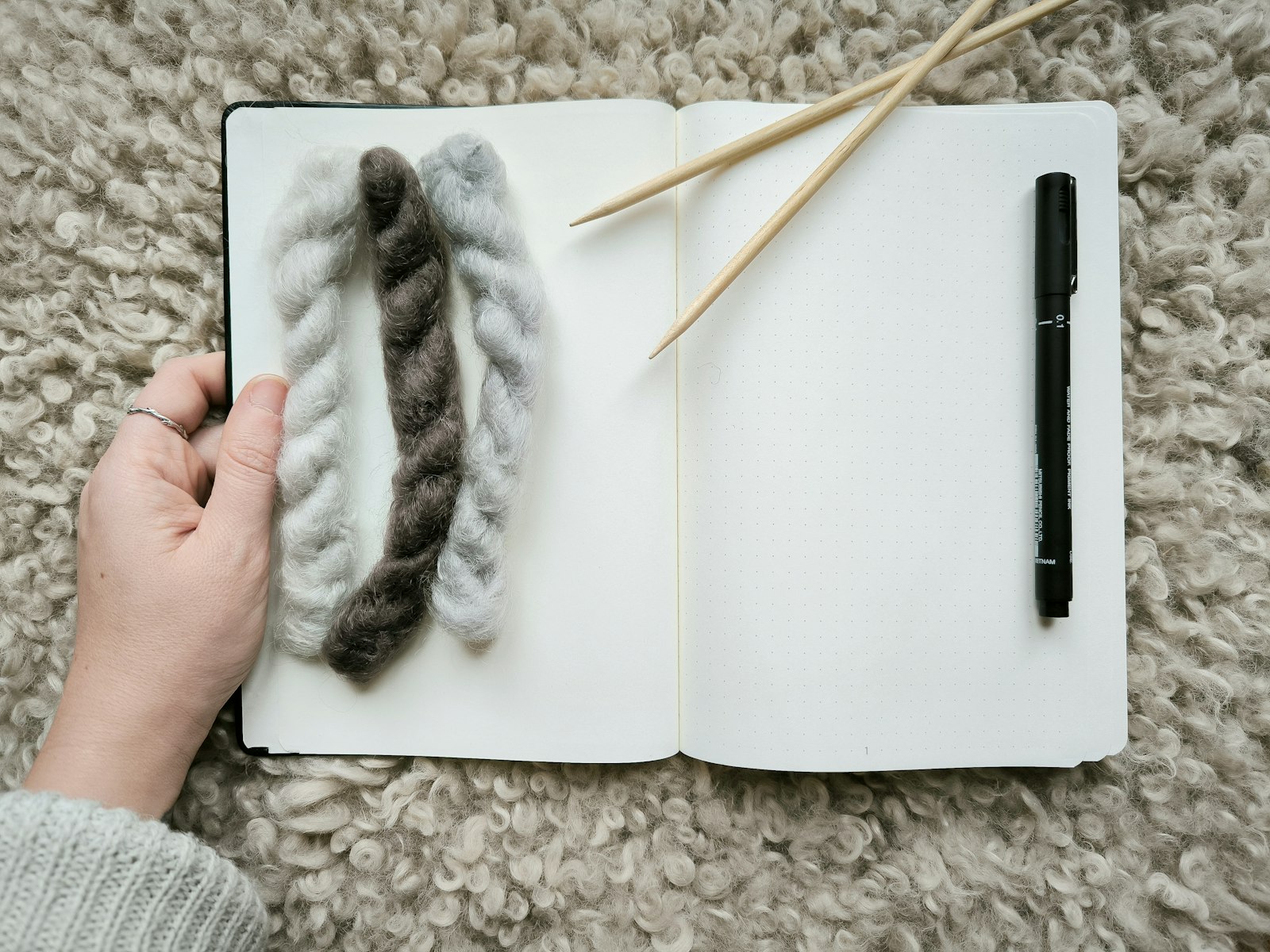
Start with photographs of the real state of things, not a staged version. If one sleeve is attached and the other is not, show that. If there are three joined squares and a pile of loose ones, lay them out together. Natural light on a plain surface is enough. The honesty is the point. A beautifully lit half-thing sets a different tone from a smug flat lay of yarn you have not touched in a year.
Include at least one close-up: the stitches, the seam, the fabric where you stopped. Readers are coming for detail they can hold up against their own work. If there is a visible error — a dropped stitch, a puckered dart, a wonky colour change — photograph it clearly and name it in the caption. That specificity is what separates a maker's note from a sigh.
Say Why It Stalled, in a Sentence or Two
Honest does not mean long. One or two sentences of plain reason is usually enough, and it makes the rest of the post easier to trust. There is a difference between the structural reason and the personal one, and both are allowed:
- Structural: "Row gauge was out by two rows per 10 cm and I only noticed at the yoke, which meant re-knitting the whole top half."
- Material: "The viscose shifted every time I cut it and I stopped trusting the layout."
- Fit: "The ease at the bust was wrong for me and the quick fix added bulk at the underarm."
- Life: "I started it the week we moved and the bag ended up in a box for four months."
Avoid hedging in a way that reads as apology. "I lost interest" is a perfectly good reason, and more useful to a reader than "I am sure I will get back to it soon." If the reason is a fit problem you did not know how to solve, say so — someone else may know exactly how, and the comments are where they can tell you.
Lead With What a Reader Can Still Take Away
A stalled project is not a wasted one. Somewhere in that bag is a small finding that deserves a few lines of its own, even if the whole piece never reaches the airing cupboard. Write that part up as if the rest had gone to plan. Readers skim for exactly these fragments.
Look back at your notes and ask what you learned before you stopped:
- A fibre note: how that wool bloomed after washing, how the linen softened or kept its hand. If your swatch tag has numbers on it, quote them, and say whether you measured before or after blocking.
- A pattern tweak: a cast-on, a short-row heel, a dart you re-drew. A self-contained tweak can live in its own post too; we cover the format in writing up your changes to someone else's pattern.
- A tool test: a new interfacing, a stitch marker, a different needle material. One sentence of plain judgement is more useful than a paragraph of hedging.
- A process note: what the order of construction did to the finishing, or how pressing between steps changed the drape.
Pull these findings out as a short list near the top of the post, so a skimmer can land on them without reading the whole story. That is often the most-read part.
Decide Whether to Go Back, in Writing
Put the decision at the end of the post, and make it a clear one. Writing it down in front of readers is a useful pressure: you are less tempted to leave the project in the wardrobe for another six months. Three honest options cover most cases:
- Finish as is. The fix is small and the piece will be worn or used. Write the next step: "Pick up stitches for the second sleeve this weekend," or "Re-cut the collar in a lighter interfacing."
- Change the brief. The jumper becomes a vest; the dress becomes a top; the blanket becomes four cushion covers. Say what it will be now and what you will do with the leftover material.
- Frog or unpick. Rewind the yarn, re-fold the cloth, return the materials to the shelf. This is a complete and reasonable outcome, and the write-up is the record of what the project taught you before you let it go.
Date the decision. A sentence like "Writing this in November; I will frog it by the end of the month" turns a vague feeling into a soft deadline that your future self can read back.
Publish It as Something Between Notebook and Note
A stalled-project post sits between the private pages of a project notebook and a polished finished-piece writeup. It can be shorter than a tutorial and rougher than a pattern, but it still earns a proper title, a legible photograph and a tag or two so other makers can find it. On WoolMap, categories work as boards: an "In Progress" or "Set Aside" board collects these posts in one place, so you and your readers can see at a glance what is waiting. The features page explains how boards and tags fit together.
Consider inviting a short conversation. End with one specific question: "Has anyone solved a sloping shoulder in top-down sweaters without a seam?" is better than "What do you think?" Readers answer specific questions. When one does, update the post with the solution and a date, and link back to their comment. The abandoned-bag post then becomes a different kind of thing: a small, collaborative notebook entry that someone, probably you, will be grateful for the next time a project goes quiet.