WoolMap Editors@yarn-notes ·
Follow (RSS)Building a Board of Patterns You Will Actually Make
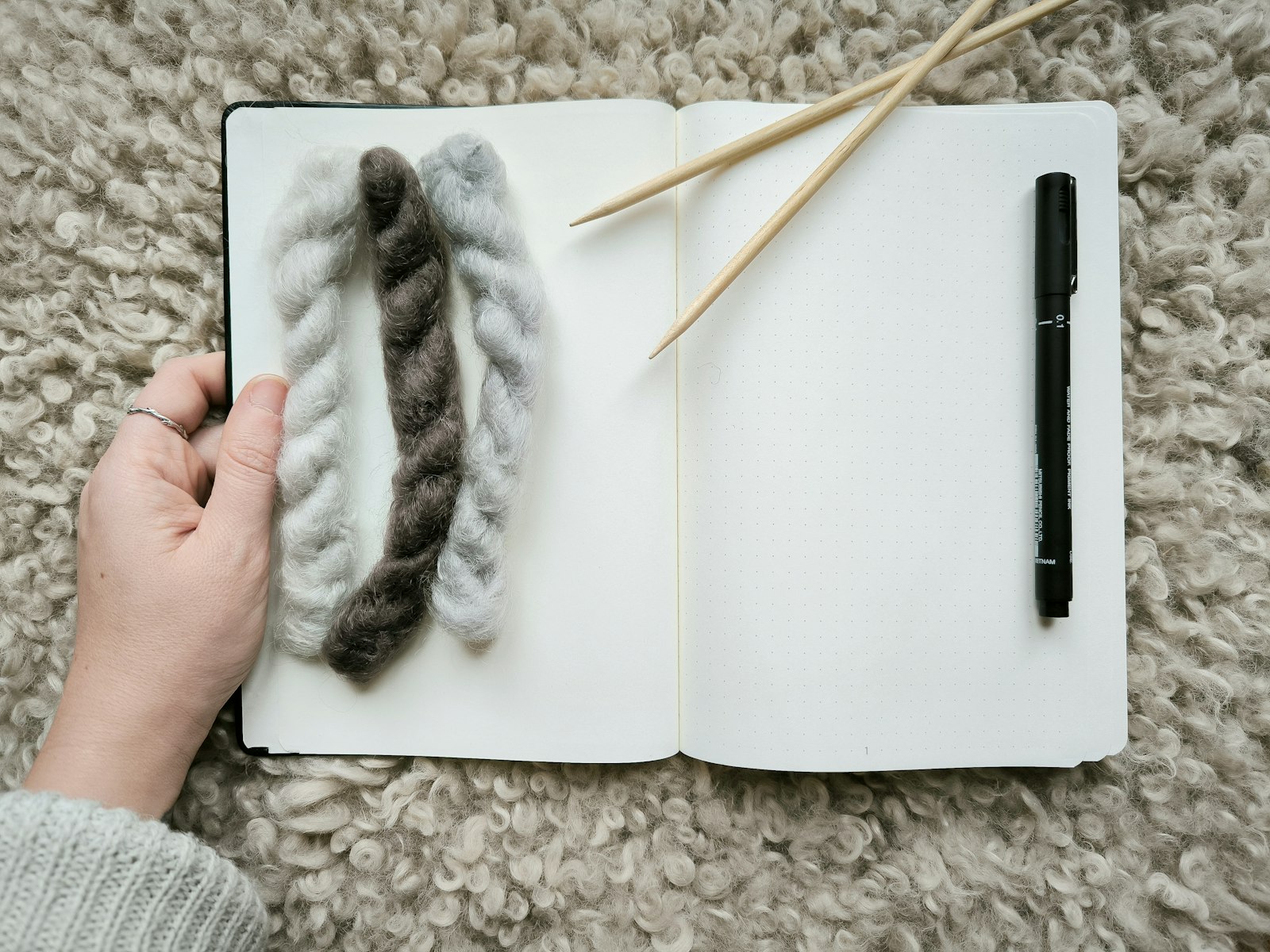
Most pattern boards start the same way. You see a lovely cardigan on a Tuesday night, you save it, and you save the next one too. A year later the board holds three hundred pieces of other people's work and you still can't decide what to cast on, because scrolling through it feels like wandering a shop that has too much stock and no staff.
A board like that is a record of what caught your eye. There is nothing wrong with keeping one. But if you want a board that ends in finished objects, it has to work differently: fewer pins, each with a reason attached, and a regular clear-out. Here is how we would build one, whether you knit, sew, crochet or stitch, and whether the board lives in a pinning app, a folder of links or a paper notebook.
Give the board one job
Separate the two kinds of saving before anything else. Keep a loose inspiration board for colour, shapes and things you simply like, and let it sprawl. Then start a second board with a stricter rule and a name that states it: "Makes for this winter", "Things to sew from the fabric I already own", "Baby gifts for the spring".
A narrow name does a lot of work. When a pretty shawl turns up and the board is called "Makes for this winter", the question answers itself: will you really be knitting lace in January, or do you want the thick socks you keep meaning to start? The shawl can go on the other board, and nothing is lost.
Three questions before a pin goes on
Pinning takes one tap, which is why boards fill up so fast. Add a short pause. Before a pattern goes on the working board, it should get a yes to all three of these:
- Who is it for? A real person with real measurements, including you. "Someone might like this" is how a board fills with gifts nobody ordered.
- Would I wear or use it? Look past the styling. A boxy linen top photographed on a beach is still a boxy linen top on a wet Thursday. Ask whether it fits the clothes and rooms you actually have.
- Can I get there from here? Check the skills list and the materials on the pattern page. One new technique is a good reason to make something. Four at once, in a yarn you can't get locally, usually means the pattern sits untouched.
Open the pattern's own page before you pin, too. Images circulate long after their links go stale, so save the link to the designer's page, where you can actually buy or download the thing.
Write a note on every pin
A pin without a note forgets why you saved it within a few weeks. The note is what turns the board from a gallery into a plan, and it only needs a few lines. Cover whichever of these apply:
- The reason: what you want from this particular pattern. The neckline, the pockets, a first go at steeking.
- The size you would make, and any measurement you already know you would change.
- Materials: how many metres of yarn or how much fabric your size needs, and whether you own something suitable.
- The obstacle: what stands between you and starting. A skill to practise, a zip to buy, a swatch to knit.
- A trigger: when you would start. "After the socks", or "once the evenings draw in".
Here is an invented example of what that might look like on a sweater pin:
For me, second size up. Want the saddle shoulders. Needs about 1,300 m of worsted; I have 1,000 m of the grey, so either add a contrast yoke or buy two more skeins. Swatch first, since I tend to knit tight. Start after the mittens.
Someone reading that note six months from now, including you, knows exactly what to do next. Numbers are worth the extra seconds, for the same reason they matter in a project log. A good pin note is really the first entry in the log we describe in writing up your changes to someone else's pattern.
Arrange pins by how close they are to starting
Most boards get sorted by type: sweaters here, hats there. That helps when you are browsing and does very little when you are choosing. For a working board, try sorting by distance from the needles instead, with three sections:
- Next up: two or three pins at most, with materials in the house and no obstacle left in the note. If you finish something tonight, the answer to "what now?" is here.
- Waiting on one thing: pins that need a single named step, like a trip to the fabric shop or a practice buttonhole.
- Later this year: pins you still mean, with a season in mind.
The small limit on the first section matters most. A short list is easy to act on, and moving a pin up into it becomes a small decision you make on purpose. If your app has no sections, a prefix in the note ("NEXT", "WAITING") does the same job.
Prune on a schedule
Boards only grow unless someone cuts them back. Put a date in the calendar, perhaps at the change of each season, and go through the working board with a cup of something. For each pin, ask whether you would save it again today. Then:
- Move it back to the inspiration board if you still love it but can't name when you would make it.
- Delete it if the person has moved on, the style has stopped being yours, or the note makes you tired. A pattern you bought stays bought, wherever the pin goes.
- Rewrite the note if the plan has changed. Maybe the grey yarn went into something else.
- Promote it if the obstacle has quietly gone away.
A useful rule of thumb: if a pin has survived two clear-outs without moving at all, it is a wish, and wishes belong on the other board. Pick a working limit too. Twenty is plenty for many makers, and a full board means something has to leave before something new arrives. Your own number depends on how fast you make things, so set it from what you finished last year.
Finished pins deserve a last look. Before you archive one, add a line on how it went and link to your write-up if there is one, so the board slowly turns into a record of what you learned.
If the board is public, make it useful to others
A shared board can help other makers plan, as long as it sends them to the source. Link each pin to the designer's own page, name the designer in the note, and use their image only in the ways they or the platform allow. Never paste instructions or charts into a note, however handy that seems; the same line about credit and copying applies here as in any write-up.
On WoolMap, a board of this kind fits naturally as a category on your profile: writers file posts into boards of their own choosing, and each one gets its own page. A monthly post called "What's on my needles next", with your shortlist and your reasons, gives readers a way in. The help page explains how categories differ from topics, and the features page shows what a profile includes.
When a pin finally becomes a project and the project throws up something you wish you had known, you may find you have a pattern of your own forming. Writing a pattern other makers can follow is a good next stop, and somebody else's board might be where it ends up.